

Stone Processing
From primary processing of raw stone to downstream deep processing and finished product assembly, the widespread use of adhesive technology has greatly improved the quality and processing efficiency of stone products
Industry Pain Points
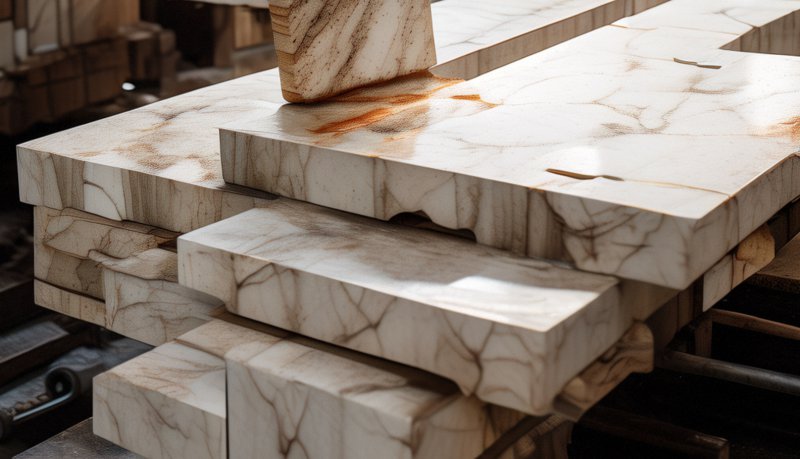
High Performance Requirements and Large Variations in Stone Materials
<p>Adhesives for stone processing must offer outstanding bond strength, weather resistance, aging resistance, resistance to high and low temperature changes and good elongation, so that stone can remain stable in various environments over the long term. Different types of stone (such as marble, granite and sandstone) have different physical and chemical properties, placing specific requirements on adhesive selection and use. Adhesive companies therefore need to develop highly targeted yet widely applicable products for different stone characteristics, which poses a challenge to their research capability and the breadth of their product lines.</p>
Solution Advantages
-
Stone Repair and Reinforcement
<p>Adhesives are used to repair defects in stone such as cracks, holes and chips. Injecting or applying adhesive restores the stone's integrity while improving its load-bearing capacity and durability.</p>
01 -
Stone Splicing and Bonding
<p>In projects such as stone worktops, wall inlays and mosaic assembly, professional stone adhesives are used for seamless splicing between stone pieces, ensuring both an attractive appearance and a tight, long-lasting connection.</p>
02 -
Temporary Fixing During Stone Processing
<p>During cutting, edging and engraving, temporary fixing adhesives are sometimes used so that precise processing can be carried out without the stone sliding or cracking.</p>
03 -
Stone Sealing and Protection
<p>Some adhesive products can also serve as sealers for stone surfaces, providing waterproofing, stain resistance and anti-efflorescence protection, preserving the natural colour and texture of the stone and extending its service life.</p>
04